✅ Editor’s Pick
🛒 Available on Amazon
💰 Value-Focused
📸 Product Images
🧭 How This Product Was Evaluated
- 👣 Comfort and usability for typical hikes
- 🧱 Materials and build quality for repeated outdoor use
- ⚖️ Value compared with similar products in the same category
- 🎒 Fit for beginner and casual hikers
🎯 Who This Is Best For
- 🧑🦯 Beginner hikers and casual outdoor users
- 🌲 Day hikes, light trails, and weekend trips
- 💵 Buyers prioritizing practical value
- 🗺️ General use in parks, trails, and travel hikes
⚙️ Product Overview
🌟 Pros & Cons
- 🙂 Comfortable for most beginner hiking needs
- ⚖️ Balanced feature-to-price ratio
- 🧩 Easy to use with minimal setup
- 🧭 Versatile for different trail conditions
- 🏔️ Advanced users may want higher-end features
- 📏 Performance depends on correct size/fit
📝 Product Details
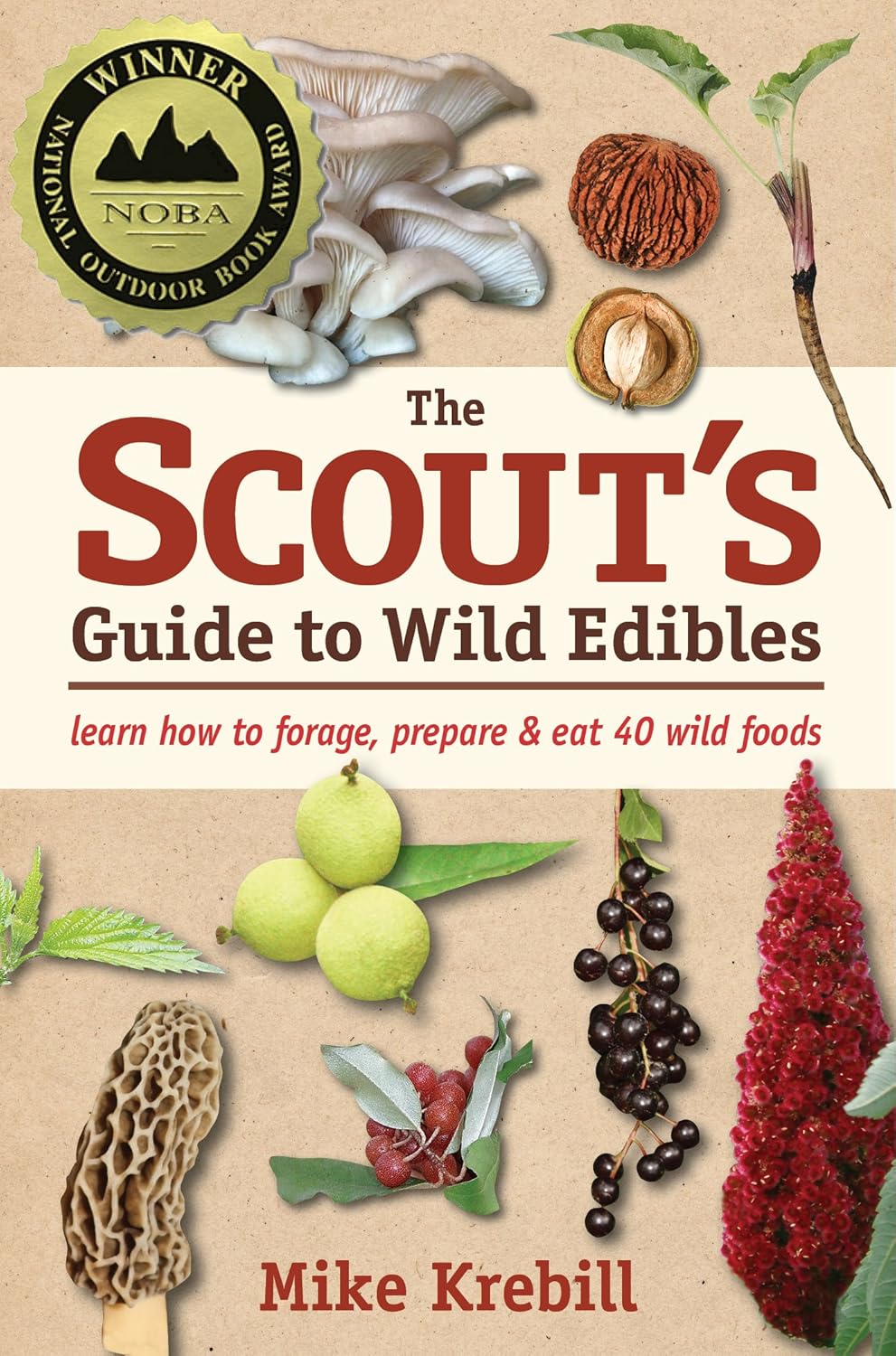
The Scout’s Guide to Wild Edibles is a National Outdoor Book Award (NOBA) winner in the Nature Guidebook category.
Ever seen a tasty-looking plant or mushroom in a yard or forest but weren’t sure if it would taste good…or even be edible? In The Scout’s Guide to Wild Edibles, renowned forager Mike Krebill profiles 40 widely-found edible wild plants and mushrooms of North America, in a guide small enough to fit right in a pocket. The author offers clear color photos and positive-ID tips for each plant, along with lip-smacking recipes and engaging projects and activities for all skill levels. The Scout’s Guide will help foragers locate, identify and safely enjoy wild edibles – with the added satisfaction of knowing exactly where their food came from. This is one of those “especially for now” kinds of books for the challenging times we are in.
From the Publisher
The Scout’s Guide to Wild Edibles

A Backpacking Make-Lunch Challenge
Scouts crave adventure and like to take on a challenge. They want to boldly go where they have never gone before. They get tired of the same old stuff, and bored with inactivity. To have a dynamic unit that attracts and keeps members, imaginative activities are a must.
With these thoughts in mind, I challenged our Patrol Leader Council to incorporate backpacking into our June campout. None of the boys had ever backpacked before, so the novelty was certainly there. No one even owned a backpack, but that wasn’t a deterrent. Our troop is an old troop, and our storeroom shelves held over a dozen donated backpacks and individual Scout cook kits.
If you work with a Scout troop or if you are a group leader with a school or church, our experience with this challenge might give you ideas for doing something similar. Spoiler alert: everyone had a wonderful time, learned something they hadn’t known before, and came away with a new sense of accomplishment.
The Process:
What we brought. For our troop, normally heavyweight campers, this wasn’t a true backpacking experience, as we did not alter our behavior. Our tents are not backpacking tents, they are heavy 4-person tents primarily designed for use at a weeklong summer camp. We took two butane tanks and a butane stove stand. Our vehicles transported four large plastic totes of cooking, dining and dishwashing equipment, two Dutch ovens, a wok, and two cast iron frying pans. We had three large picnic coolers, lanterns, a dining fly, and two water coolers, a hatchet, an axe, a splitting maul, a 2-lb. sledge hammer for driving tent stakes, a bag of charcoal, a charcoal starter, and a shovel for moving hot coals…not even close to lightweight camping.
Mother Nature and a change of plans. Our intent was to drop the boys off and let them backpack their sleeping bags and clothes to the campsite, about a mile and a half inside the state forest. However, we got a late start, darkness was approaching, and it began raining and kept raining, and raining. Fortunately, we were able to get two large tarps over a couple of picnic tables, high enough to allow our cooks to prepare and cook our meals.
Backpacking. After breakfast dishes were done the next morning, the boys decided to backpack to a lake about a mile away. A couple of lads brought fishing poles, knowing ahead of time that fishing was permitted. Each person’s challenge was to come up with and cook his own lunch, finding wild edibles enroute. Soup was a suggestion; boys had brought their water bottles and a cook kit. I carried instant rice that they could add as one ingredient.
Wild soup. On the hike, we found several edible wild plants that the boys added to their soups: wild garlic, yellow wood sorrel and plantain among them. The boys enjoyed the experience and got creative with their soups. Most added rice. One even dropped a handful of M&Ms in his soup! It may have seemed like a good idea at the time, but it looked and tasted disgusting, and he didn’t want to finish it.
Fire. Even more challenging than creating a soup was building the fire to cook it. The rain had thoroughly soaked all the wood overnight. The boys had to carve away the wet outer layers in order to find wood dry enough to create shavings to light. The rain started again and fortunately the pots covered enough of the fire to keep it going.
The results. The boys succeeded against the odds. They backpacked, identified and brought back edible wild plants, made soup, built a fire and fed themselves. An unforgettable adventure.
Notes:
This challenge is a great way to incorporate many facets of foraging and scouting, not to mention an excellent opportunity to try out some of the other recipes and activities in this book!

Cracking and Shelling Hickory Nuts
Depending on who you ask, there are different ways to go about cracking and shelling hickory nuts. My favorite technique is to combine the two methods below.
The Process:
Method 1 (courtesy of foraging expert Sam Thayer)
When it comes to hickory nuts, using a nut pick is a waste of time. Instead of freeing large pieces from the shell, the pick tends to pulverize the nutmeat to fine meal. Forager Sam Thayer showed me a better way. The secret lies in cracking the nut correctly in the first place: set the nut on its narrow side and then strike the opposite narrow side (which is facing up) with a hammer.
In order to crack the nut easily, a firm, non-yielding surface beneath it makes a big difference. Sam likes a red oak log; Dave, a friend of mine in Michigan, uses a heavy metal block. A father of one of my former students in Michigan worked in a tool and die shop and gave me a heavy metal block, so that is what I use.
I set the nut on an old washrag or other cloth to keep the nut from sliding on the hard surface when struck with the hammer. I hold the nut between a gloved finger and thumb, being sure to keep my fingers as far down on the nut as possible so I don’t bash them with the hammer. The purpose of the glove is less to protect my fingers from being hit by the hammer than it is to reduce “shell shock” as the shell bursts open after being struck. After repeated strikes, these explosions eventually tear up the cloth under the nut. The metal block does a good job of concentrating the impact on the nut.
If the hickory nut has a symmetrical shape, and you strike it just right with a hammer, it should crack into this X-pattern. You can pull off the ends, then the sides, and you can get large pieces of nutmeat – frequently whole halves – this way. With practice, a person can get better and better at it. I’ve cracked thousands of hickory nuts since Sam showed me his discovery, and I love seeing this perfectly-cracked pattern.
Method 2:
Ray, a Michigan friend, showed me another clever approach. He uses a vise to crack open the hickory nut. It was definitely slower than Sam’s hammer, but less dangerous for a person with less control. Ray modified a 6″ pair of diagonal, side-cutting pliers by grinding the head narrower so that it could clip away at the imperfectly cracked shell of hickory nuts. These modified pliers freed larger pieces of nutmeat more rapidly than nut picks. Wanting to have my middle school science classes crack and shell out hickory nuts as an activity, I went shopping for six pairs of diagonal pliers. The 6″ diagonal pliers that Ray used were expensive, and I could see that they would require a lot of grinding to make them work. I wasn’t looking forward to that. Then I spotted 4-1/2″ diagonal pliers with a smaller head that might work without any grinding. They had cushioned grips, which I judged to be an advantage. The smaller pliers, I reasoned, might work better for the smaller hands of our 7th graders. I bought three different brands so that the students could tell me which they liked best for clipping away the nutshell.
Note: Always carefully inspect the hickory nuts you’ve extracted to make sure they are free of shell shards. One technique to reduce shell shards is to make the shell more flexible before you hit the nut with a hammer. You can do this by soaking a quart of nuts overnight in cold water, or by dropping them into boiling water for two minutes.

Sumac Lemonade – Two Ways
Yield: 3 Quarts For Each Recipe:
Students in my 7th grade science classes learned experimenting skills by trying to find the answer to this question: ‘How can we produce consistently good looking and good tasting sumac lemonade?’ After 20 years of research and testing, we concluded that the two recipes below produced sumac lemonade that was consistently equal in appearance and taste.
Giant Tea Bag Method.*
1 quart super-sour, bright red sumac drupes.
1-1/2 quarts of boiling water.
3/4 cup sugar (or sweeten to taste).
4 pounds of ice.
Tools:
Cheesecloth and scissors.
Large rubber band.
Long wooden spoon.
Tongs.
1-gallon plastic pitcher.
1. Cut two rectangular pieces of cheesecloth 24-30″ long. Lay one on top of the other, crisscrossing at right angles.
2. Put the drupes in the middle, and then bring up the sides and twist, forming a giant tea bag. Fold the top over and secure it with a rubber band.
3. Put the tea bag in a gallon pitcher with the top of the bag sticking up. Pour the boiling water over the tea bag. Use the tongs to dunk the bag up and down for no more than 10 seconds. Let it drain into the pitcher, then dispose of the bag.
4. Stir in sugar until dissolved. Add ice to bring the level to 3 quarts. Taste. Add more sugar if necessary.
_____________________
*Credit for the idea of forming a giant tea bag belongs to Jim Meuninck. He demonstrated it in a video he did with James Duke, titled Edible Wild Plants Video Field Guide to 100 Useful Wild Herbs, Media Methods, 24097 North Shore Drive, Edwardsburg, MI 49112.
Two-Minute Stir Method:
1 quart super-sour, bright red sumac drupes.
3 quarts cold water.
¾ cup sugar.
Tools:
Two 1-gallon plastic pitchers.
Long wooden spoon.
Flour sack dishtowel.
1. Place the drupes in one pitcher and add 3 quarts of water.
2. Stir with a wooden spoon for two minutes.
3. Place a flour sack dishtowel over the other pitcher, letting it sag into the pitcher a little bit. Have a helper hold it in place so it can’t slip down, as you pour the liquid out of the stirred pitcher. This removes the drupes and sediment. Carefully lift the towel off and dispose of it with the drupes and sediment.
4. Stir in the sugar and taste. Add more sugar if necessary.
Publisher : St. Lynn’s Press
Publication date : November 15, 2016
Edition : Illustrated
Language : English
Print length : 192 pages
ISBN-10 : 1943366063
ISBN-13 : 978-1943366064
Item Weight : 8.6 ounces
Dimensions : 4.75 x 0.5 x 7.25 inches
Best Sellers Rank: #1,211,327 in Books (See Top 100 in Books) #245 in Camping & RV Cooking #272 in Mushrooms in Biological Sciences #1,239 in Hiking & Camping Instructional Guides
Customer Reviews: 4.7 4.7 out of 5 stars (487) var dpAcrHasRegisteredArcLinkClickAction; P.when(‘A’, ‘ready’).execute(function(A) { if (dpAcrHasRegisteredArcLinkClickAction !== true) { dpAcrHasRegisteredArcLinkClickAction = true; A.declarative( ‘acrLink-click-metrics’, ‘click’, { “allowLinkDefault”: true }, function (event) { if (window.ue) { ue.count(“acrLinkClickCount”, (ue.count(“acrLinkClickCount”) || 0) + 1); } } ); } }); P.when(‘A’, ‘cf’).execute(function(A) { A.declarative(‘acrStarsLink-click-metrics’, ‘click’, { “allowLinkDefault” : true }, function(event){ if(window.ue) { ue.count(“acrStarsLinkWithPopoverClickCount”, (ue.count(“acrStarsLinkWithPopoverClickCount”) || 0) + 1); } }); });
🏁 Final Assessment
If the size and materials match what you need, check today’s price and the latest reviews before you decide.
❓ Frequently Asked Questions
Is this suitable for beginners?
Yes. It’s designed to be easy to use and practical for people new to hiking.
What type of hiking is it best for?
Day hikes, light trails, and casual outdoor activities.
Is this good value for money?
It offers a balanced mix of features and price compared with similar products.
Affiliate Disclosure: hikingdeal.com participates in the Amazon Services LLC Associates Program.
Prices and availability are subject to change.

